

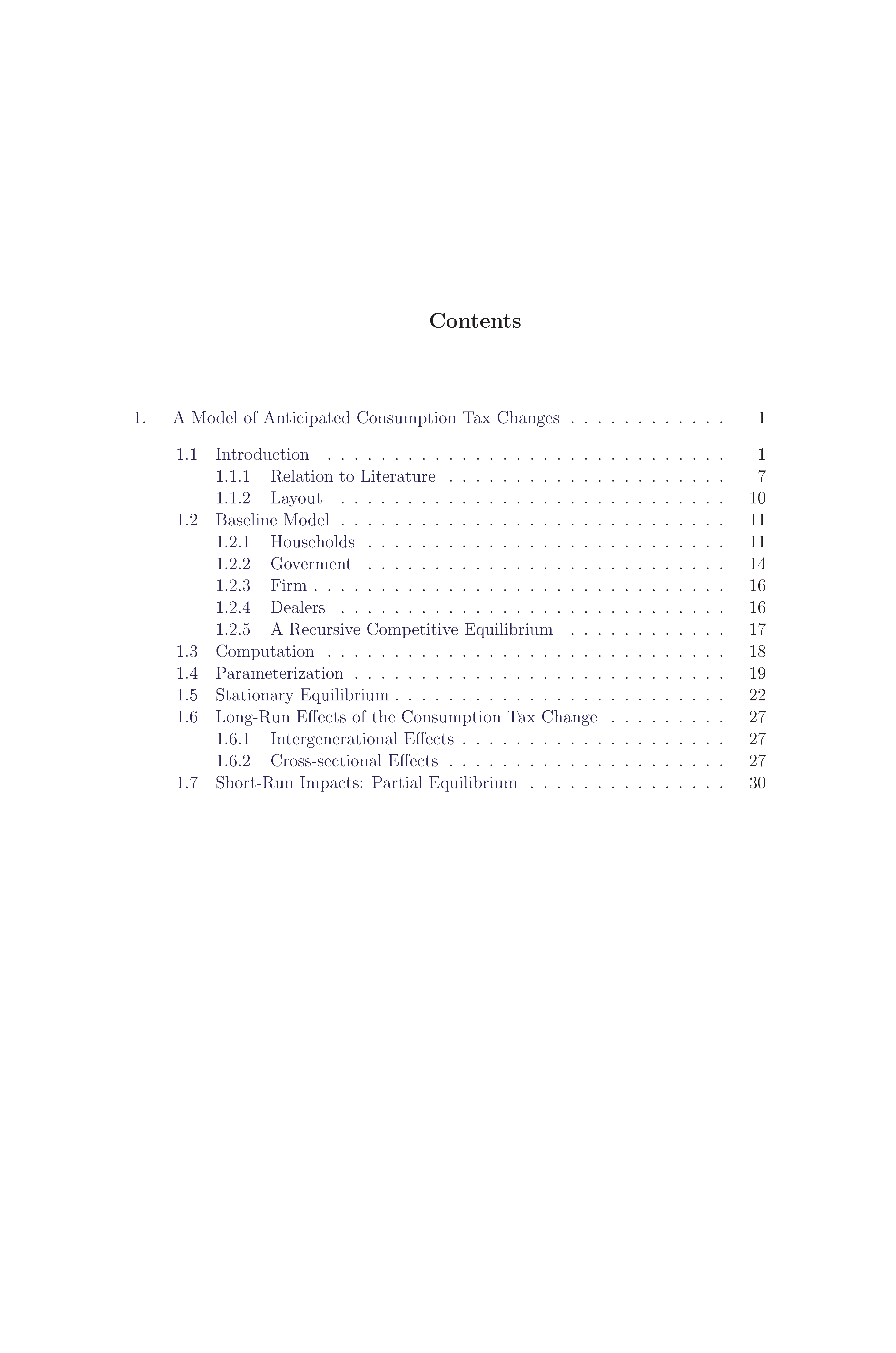
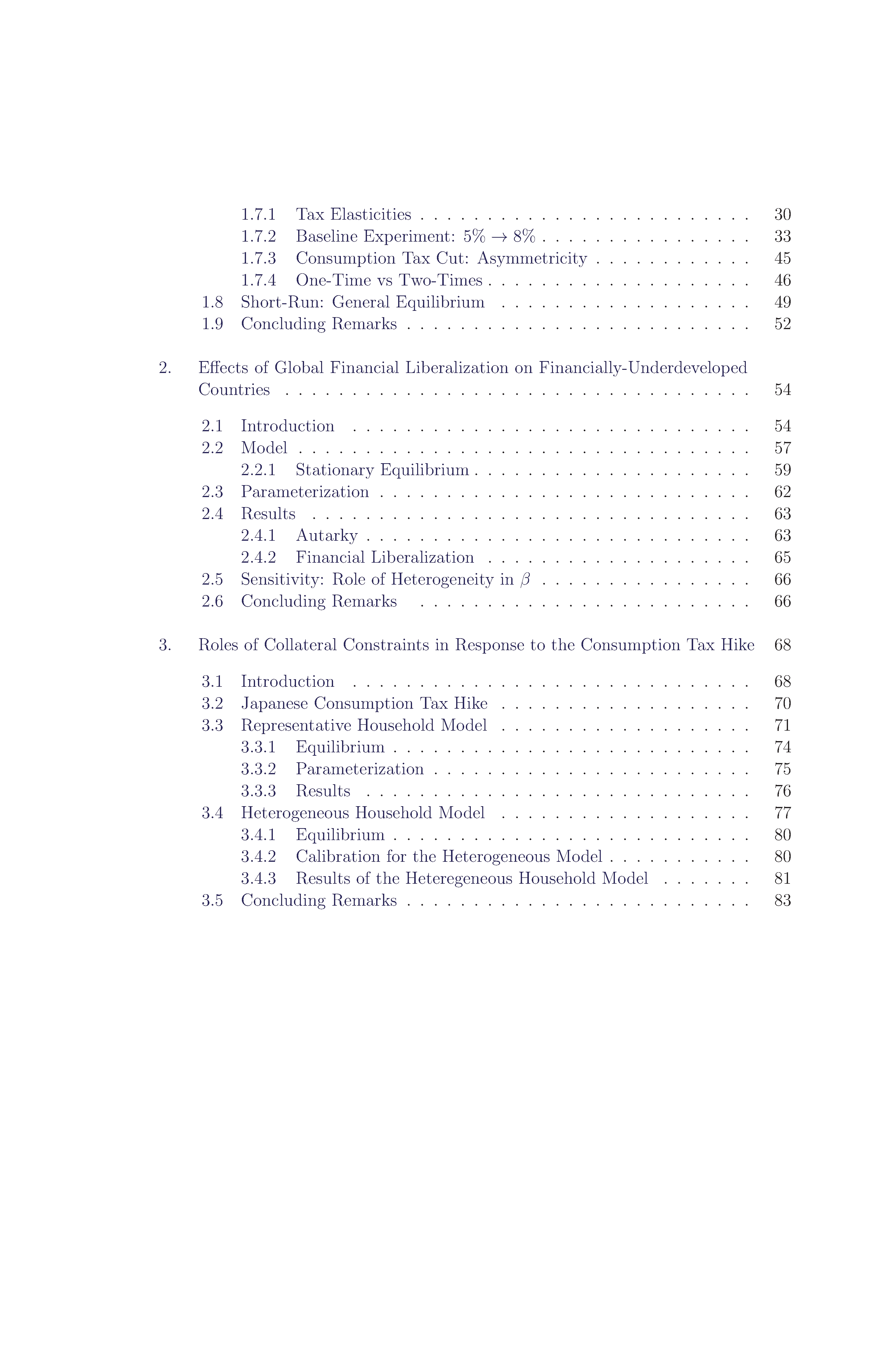
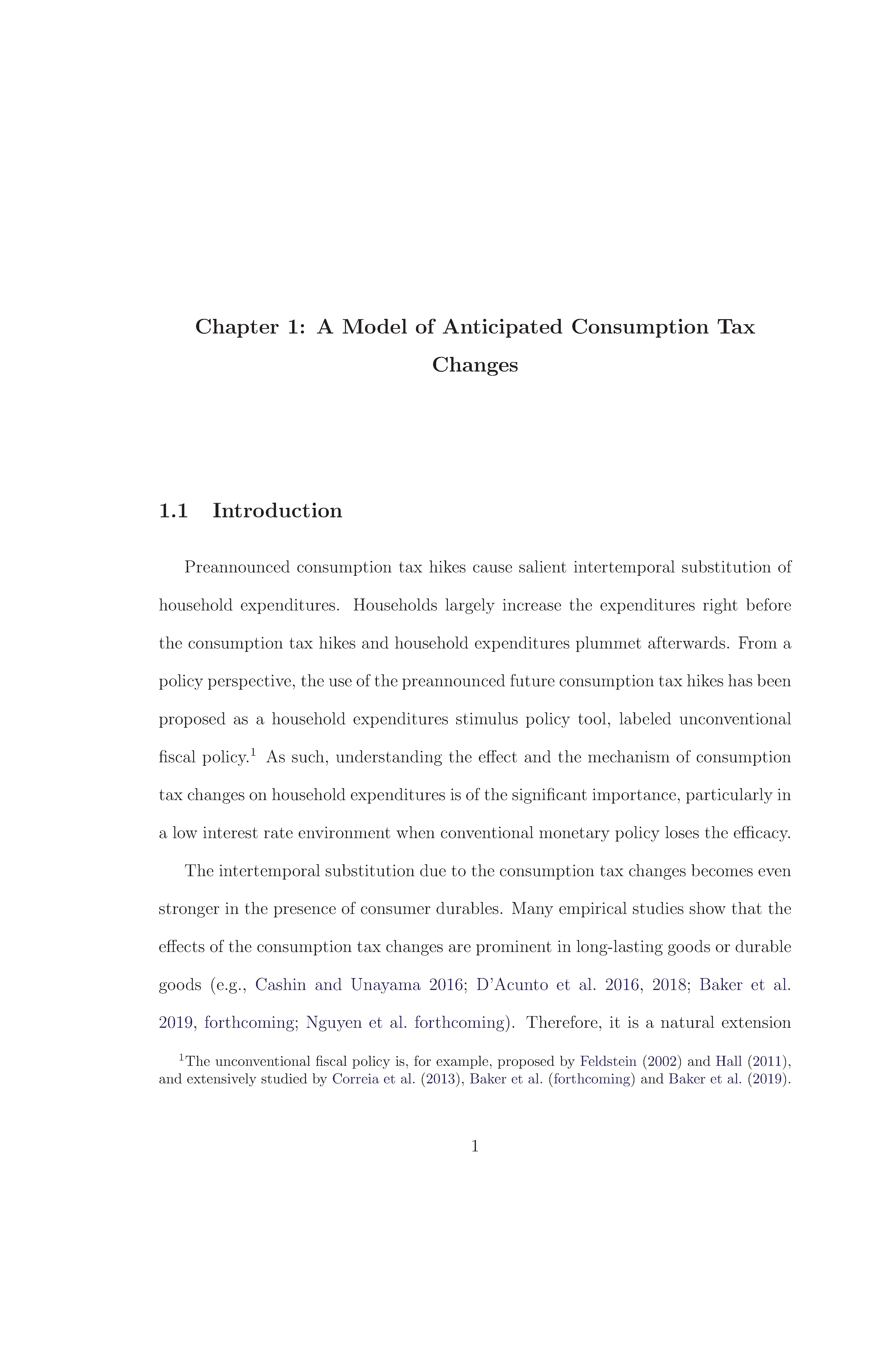
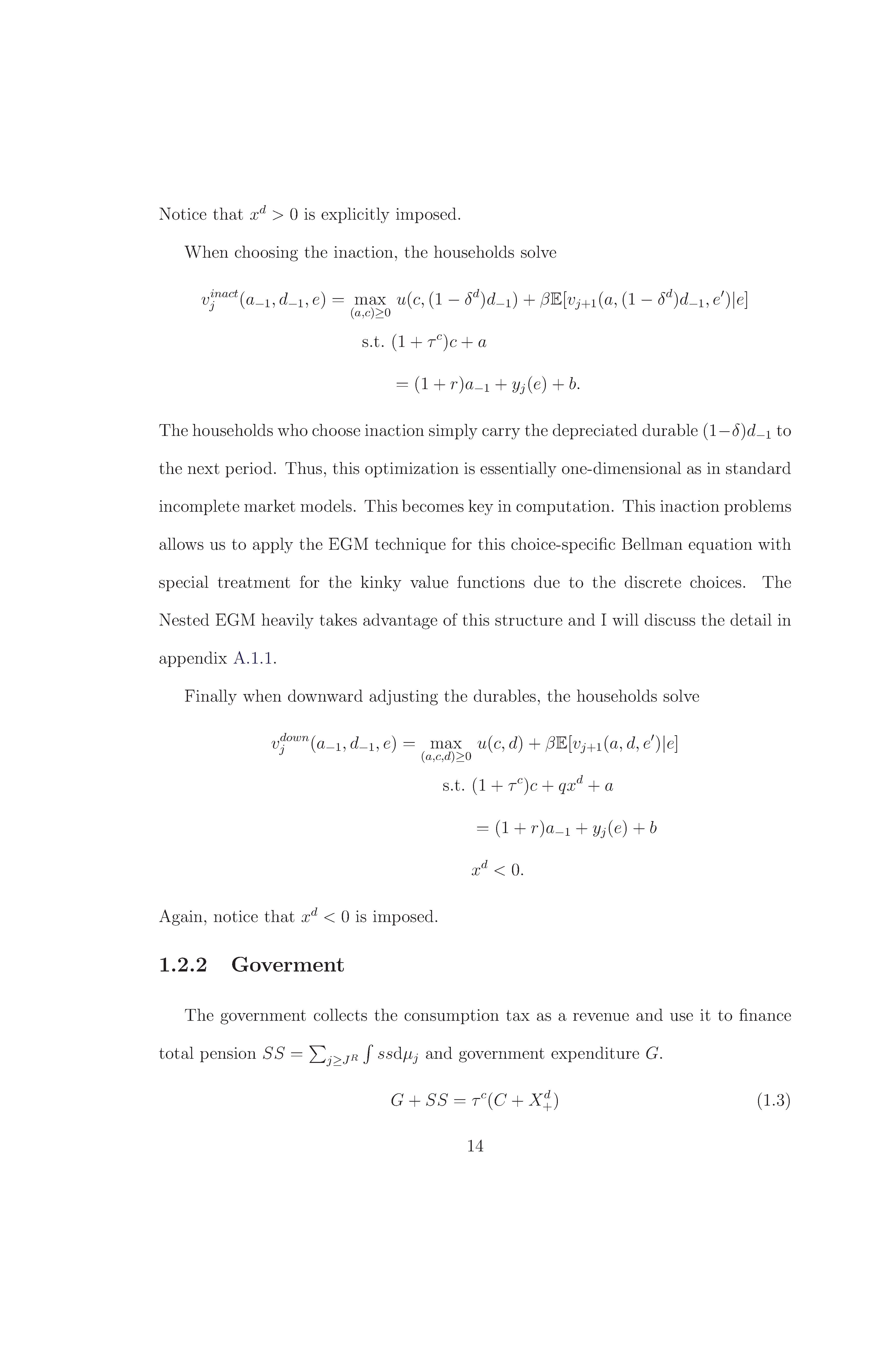
Unrealistic Profits, Unreliable Results: Rethinking Stockpiling Behavior in Consumption Tax Models
Beschreibung
Consumption taxes, levied on the final purchase of goods and services, are a prevalent means for governments to raise revenue. To assess the potential impact of these taxes, economists rely on consump ...
                            Consumption taxes, levied on the final purchase of goods and services, are a prevalent means for governments to raise revenue. To assess the potential impact of these taxes, economists rely on consumption tax models that simulate consumer behavior and predict revenue generation. However, a key limitation of these models lies in their depiction of stockpiling behavior. Stockpiling refers to the act of consumers purchasing goods in advance of a perceived future price increase, often triggered by an anticipated rise in consumption taxes.
While acknowledging stockpiling, existing models often rely on simplifying assumptions, leading to potentially unrealistic and misleading results. This paper argues that current consumption tax models often overestimate the extent of stockpiling, resulting in inflated predictions of profit
Details
- Auflage: 0
- Veröffentlichungsdatum: 28.06.2024
- Von Sanam
- Sprache: Englisch
- ISBN: 978-3-384-27435-9
- Seiten: 88
- Maße und Beschnitt: 15,5 x 23,4 cm
- Gewicht: 161,8g
- Produktionszeit: 5 Werktage

Das könnte dir auch gefallen
-
 Lohn, Preis und Profit
 -
 Essays on some unsettled Questions of Political Economy
 -
 Lombard Street : a description of the money market
 -
 Elements of Foreign Exchange A Foreign Exchange Primer
 -
 On the Economy of Machinery and Manufactures
 -
 The Evolution of Modern Capitalism A Study of Machine Production
 -
 The Evolution of Modern Capitalism A Study of Machine Production
 -
 Het Geld van Robinson Crusoe Populaire uiteenzetting omtrent den oorsprong en het gebruik van geld als ruilmiddel
 -
 Algorithmisches Trading
 -
 Besser Auskommen mit dem Einkommen
 -
 Der Fremde an meinem Wohnzimmertisch
 -
 Jackpot!
 -
 Das ABZ der Geldanlage und Börse
 -
 Vermögen schützen
 -
 Finanzielle Naturgesetze
 -
 Der Finanzwesir 2.0 - Was Sie über Vermögensaufbau wirklich wissen müssen. Intelligent Geld anlegen und finanzielle Freiheit erlangen mit ETF und Index-Fonds
 -
 Verstehen Sie Geld?
 -
 Inkasso... aber bitte keine weiteren Katastrophen
 -
 Krisengold
 -
 Der Crash ist Ihr Freund
