
Der Autor hat in den 90er Jahren des letzten Jahrtausends etwa zehn Jahre in Irland gelebt. In dieser Zeit wurden die Erzählungen der geplanten Buchreihe niedergeschrieben. In diesen Erzählungen werde ...
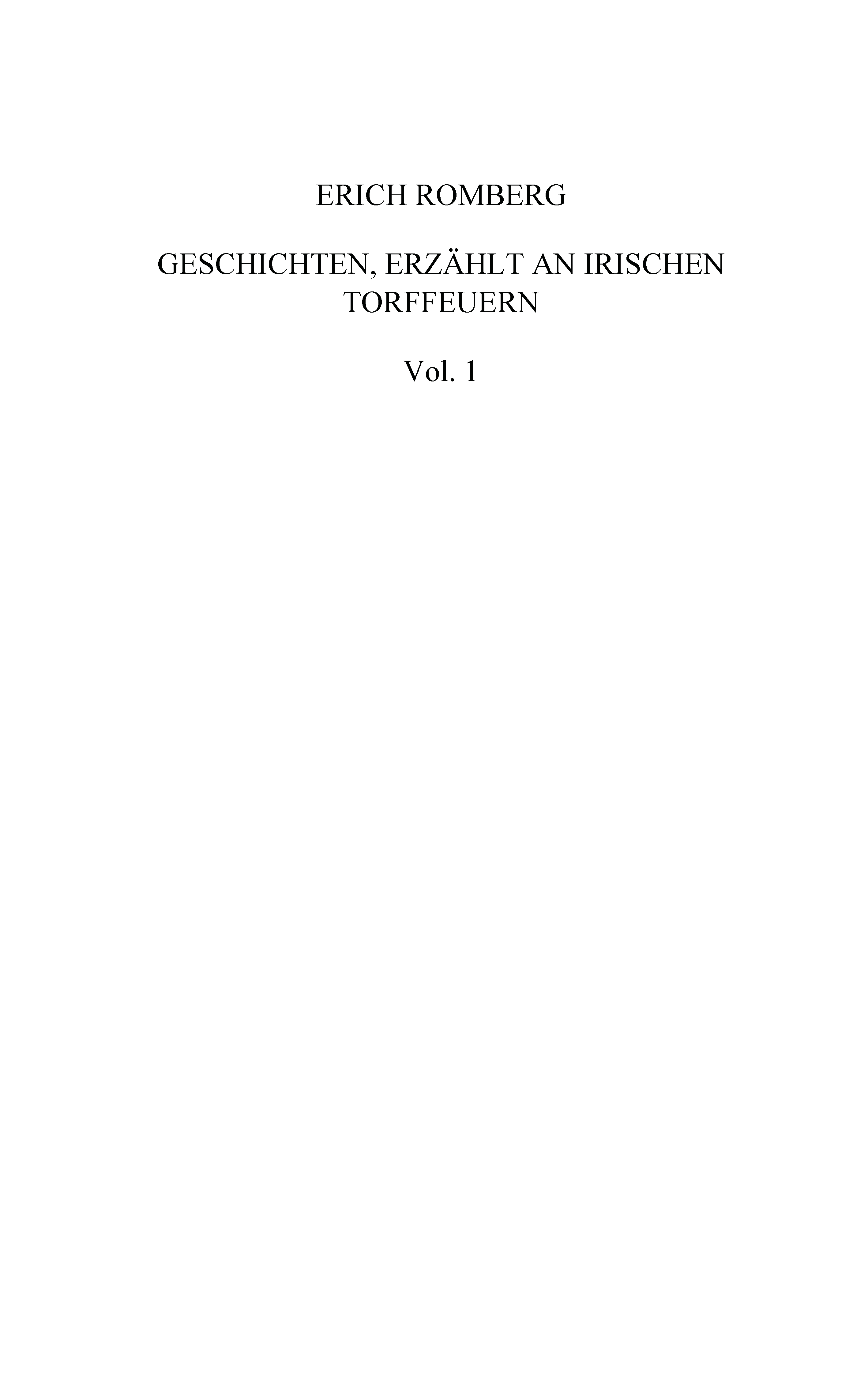
Der Autor hat in den 90er Jahren des letzten Jahrtausends etwa zehn Jahre in Irland gelebt. In dieser Zeit wurden die Erzählungen der geplanten Buchreihe niedergeschrieben. In diesen Erzählungen werden Tatsächliches und Fiktion vermischt. Es geht um das traditionelle Geschichtenerzählen der alten Zeit in Irland. Die Idee dazu kam ihm bei einem Geschichtenerzähler Festival in dem westirischen Städtchen Kiltimagh, dem er hier zum ersten Mal beiwohnte. Seine Anregungen holte er sich aber aus den Erzählungen der Menschen an den knisternden Torffeuern, die zu den Geschichten eine mystische Atmosphäre zauberten.
In diesem 1. Band der geplanten Reihe gibt es drei Rahmenhandlungen, in die diese Geschichten eingebaut werden. Es geht um Selbsterfahrung und Liebe, Vorurteile und Courage sowie den Tod und dem Umgang damit. Vor allem aber geht es um das Geschichtenerzählen selbst:
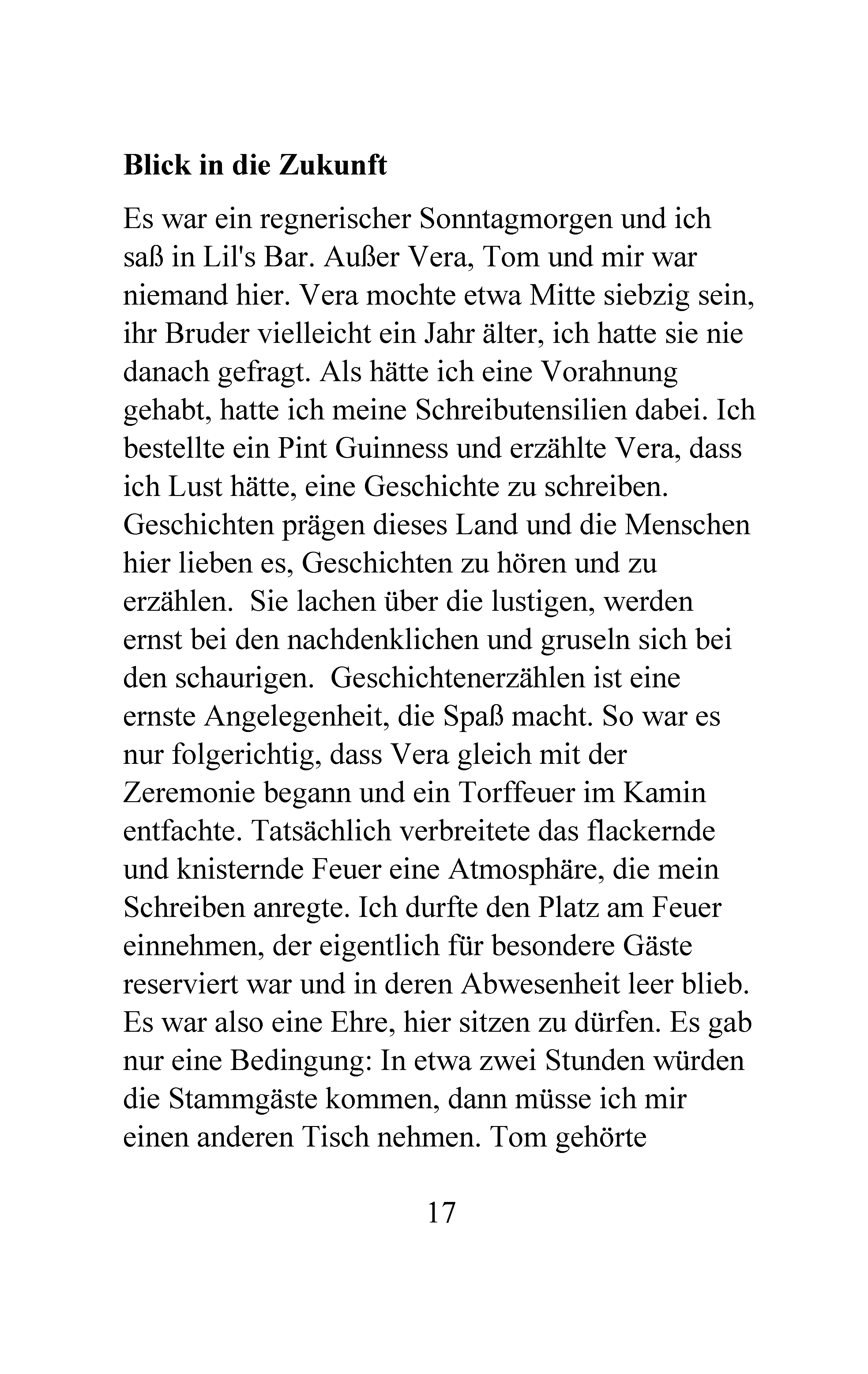
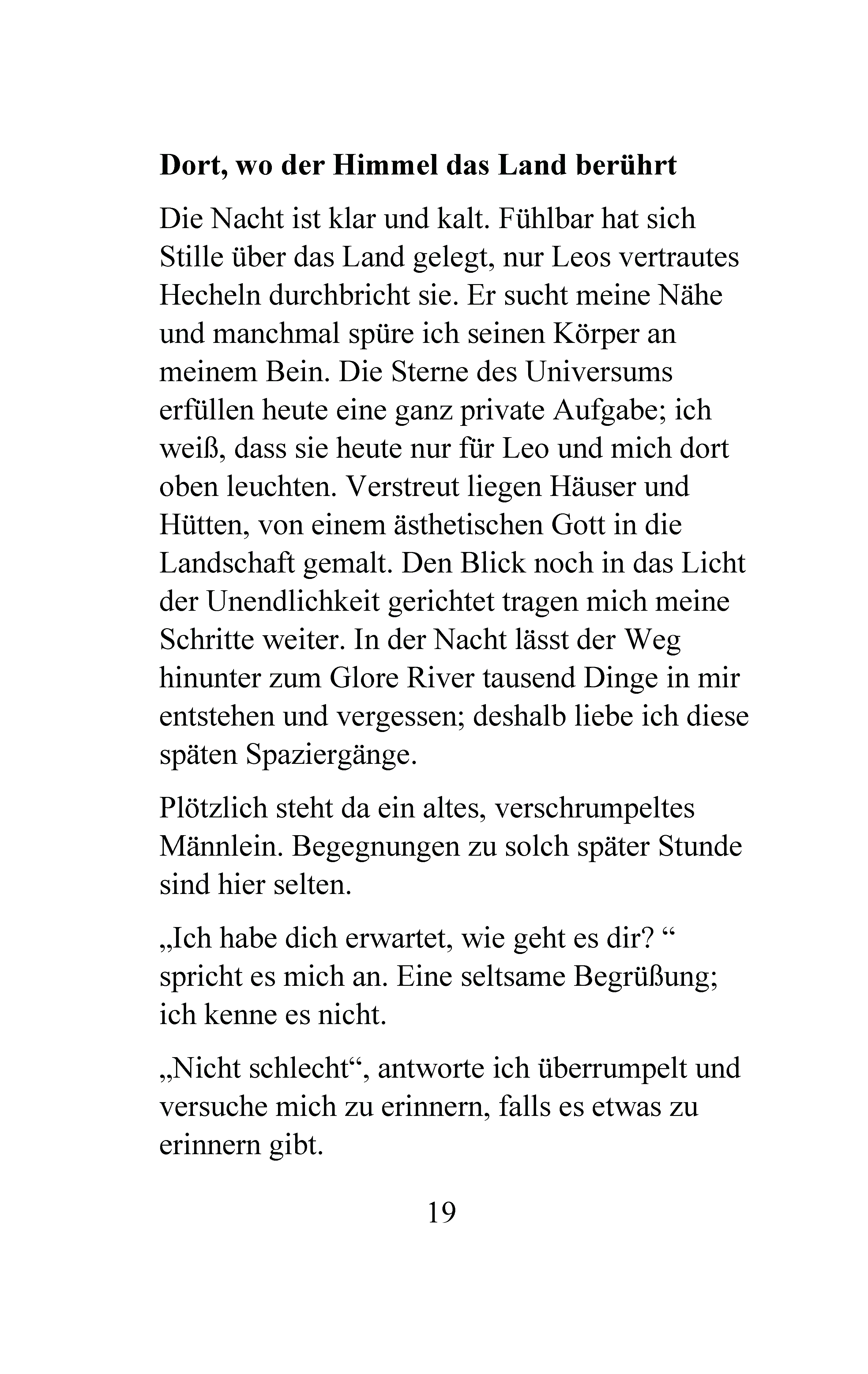
In der 1. Geschichte trifft der Erzähler einen seltsamen alten Mann, der ihn um eine ungewöhnliche Gefälligkeit bittet.
…
Die Titelgeschichte erzählt vom Nomadenmädchen Saóirse, das gerade sechzehn Jahre alt geworden ist. Sie darf am Wochenende zu Beginn eines Storyteller-Festivals zum ersten Mal unbegleitet Erfahrungen in der kleinen Stadt Kiltimagh sammeln. Es wird eine Zeit voller Geschichten und Saóirse lernt die Liebe kennen. Über all dem wacht die weise alte Méabh, die dem Mädchen den Rat gibt, nur auf den Ruf ihres Herzens zu hören. Das ist gar nicht so einfach, doch infolgedessen trifft sie am Ende eine schwere und schmerzliche Entscheidung.
...
Als letztes erfährt der Leser die Geschichte eines Geschichtenerzählers, der das Geschichtenerzählen verlernt hatte. Dann gerät der Protagonist unvermittelt in die Rolle eines Scharfrichters.
Details
Buchdaten
Auflage: 0
Veröffentlichungsdatum: 11.12.2023
Von Erich Romberg
Sprache:
Deutsch
Daten: Softcover
ISBN: 978-3-384-06089-1
Seiten: 176
Maße und Beschnitt: 12 x 19 cm
Gewicht: 189,9g
Produktionszeit: 5 Werktage
Daten: Hardcover
ISBN: 978-3-384-06090-7
Seiten: 160
Maße und Beschnitt: 14,8 x 21 cm
Gewicht: 369g
Produktionszeit: 6 Werktage
Über den Autor
Mehr über Erich Romberg
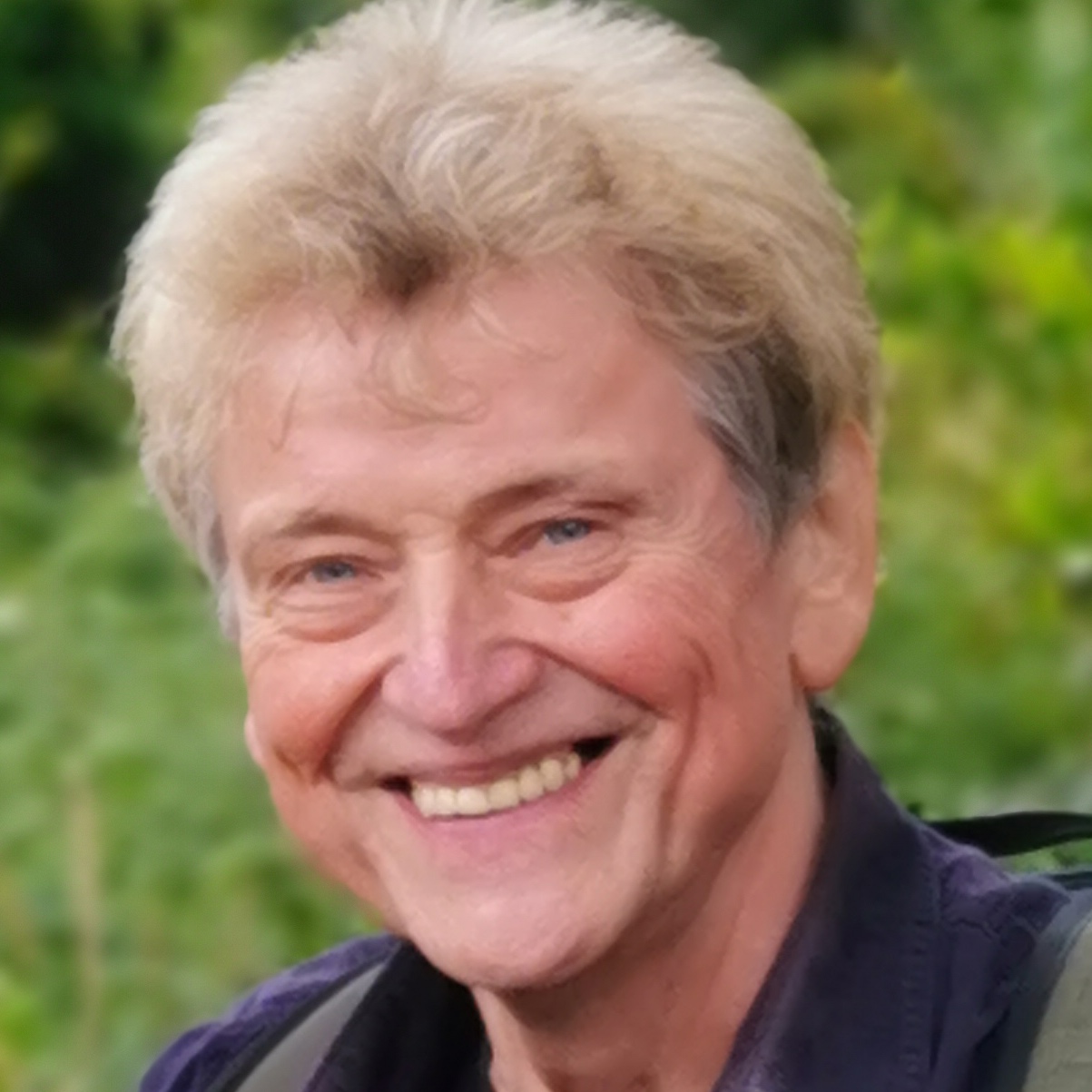
Erich Romberg was born in Essen in 1950 and grew up in the Ruhr region. He still remembers the bombed-out houses of the post-war period, which he visited with his father to collect roof beams for firewood. The family was barely making ends meet.
Then came the economic miracle, and little by little t
Erich Romberg was born in Essen in 1950 and grew up in the Ruhr region. He still remembers the bombed-out houses of the post-war period, which he visited with his father to collect roof beams for firewood. The family was barely making ends meet.
Then came the economic miracle, and little by little the ruins disappeared from memory and the many empty fields were covered with new houses.
All he remembered from primary school was that most of the teachers beat the children and that a
trainee teacher read his essay about a walk in the woods out loud to the class as an example of how it should be done. It was his first A and a source of satisfaction, because his class teacher thought he was a boy who would never amount to anything. But he never had to repeat a year. There were still quite a few teachers like that back then.
After completing a craft apprenticeship, the essay writer was drawn back to school, an evening school in the Ruhr area. Here he was amazed to discover the beautiful things of the mind. Although he actually wanted to do something completely different, he studied physics. As a physicist, he researched in various fields for a while and eventually became a consultant for air pollution control and local climate.
Writing had always been a part of his life; he felt the need to express his personal insights and feelings in poetry and stories. He discovered the momentum that stories take on when you simply write them down. They develop a life of their own, and the writer doesn't know in advance what the end result will be – at least that was the case for him.
Just as he wrote his stories spontaneously, he also ended his previous life and moved to Ireland, which he had cycled around on holiday for two years. He got to know Kiltimagh on his first holiday there. After his second holiday in Ireland, he rented a house in Kiltimagh for five years from an Irish friend from Germany. There he found time to write and windsurf, which he enjoyed equally. He also met his current wife through his online published literature. Today, the author lives with her and his young son in a village in Saxony-Anhalt. The idea of leaving books behind for his children became increasingly appealing to him. He himself knows very little about his father, as he told him very little about his past. It was probably the collective silence of that generation.
Erich Romberg was born in Essen in 1950 and grew up in the Ruhr region. He still remembers the bombed-out houses of the post-war period, which he visited with his father to get out roof beams for firewood. The family just about managed to make ends meet.
Then came the economic miracle and the ruins
Erich Romberg was born in Essen in 1950 and grew up in the Ruhr region. He still remembers the bombed-out houses of the post-war period, which he visited with his father to get out roof beams for firewood. The family just about managed to make ends meet.
Then came the economic miracle and the ruins gradually disappeared from his memory and the many open fields were covered with new houses.
All he remembers about primary school is that most of the teachers beat the children and a trainee teacher exposed him as a good essay writer. He still remembers being allowed to read out an essay about a walk in the woods because the trainee teacher thought it was so good. That was good, because the class teacher thought he was stupid. However, he was probably not stupid enough to be demoted down a class level.
After an apprenticeship in a trade, the essayist was drawn back to school, an evening grammar school in the Ruhr area. Here he was amazed to learn about the beautiful things of the mind. Although he actually wanted to do something completely different, he studied physics. As a physicist, he researched in various fields for a while and finally became an expert on the environment and climate.
Writing had accompanied him the whole time, it was a need to put feelings into poetry and stories. He learnt about the momentum that poems and stories take on when you simply write them down. They develop a life of their own and the writer doesn't know beforehand what will come out in the end, at least that's how it was for him.
Spontaneously, as he wrote his stories, he also ended his previous life and moved to Ireland, which he had been cycling around on holiday for the previous two years. On his first holiday, he got to know Kiltimagh. After his second holiday in Ireland, he rented the house in Kiltimagh from an Irish friend from Germany for five years. There he found leisure for writing and windsurfing, which he enjoyed equally. Publishing was not on the agenda back then.
Today, the author lives with his wife and underage son in a village in Saxony-Anhalt. The idea of leaving books to his son seemed increasingly appealing to him. The author hardly knows anything about his own father. He didn't want to burden his son with his own manuscript chaos. So he has now begun - against his physicist nature, love of chaos - to bring order to his manuscripts.